
3D Printing for Functional Prototyping
作者:Shenzhen Seetop Technology Co.,Limited
浏览:
发表时间:2020-01-13 15:32:43
3D Printing for Rapid Prototyping
Rapid prototyping is a valuable tool for large engineering and design companies. With the proliferation of desktop 3D printing in recent years, the technology is becoming increasingly interesting for small businesses. But how do you get started? What sorts of prototypes can be produced with which technology? Can you do it yourself or should you get things 3D printed? And how can your company profit from 3D printing prototyping?
In a nutshell, here’s what you need to know about 3D printing prototyping.
3D PRINTING PROTOTYPING
The Concept Models
Design
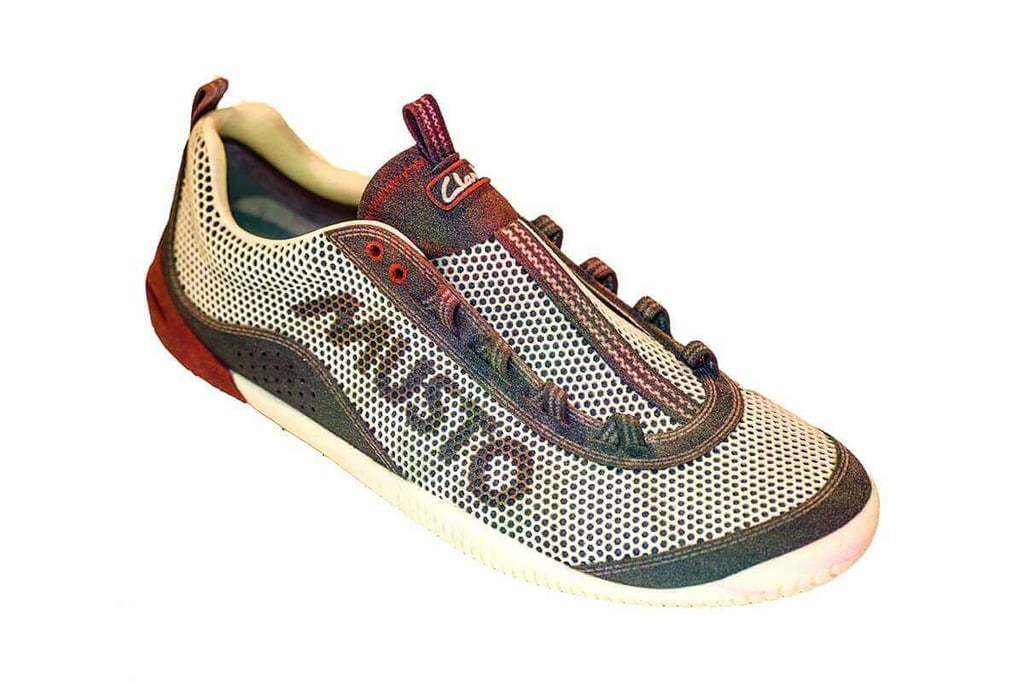
At the beginning of many product developments lies a phase were concepts compete against each other, until at the end of much debate the design team can turn in the raw 3D data that is the groundwork for functional prototypes. ColorJet Printing is an effective tool to create lifelike visual models with fine details and smooth surfaces. But in case you focus on the shape or the volume of a design, you might prefer monochromatic Stereolithography, Fused Deposition Modeling or Selective Laser Sintering.
Research
But rapid prototypes aren’t only a tool to visually communicate ideas. They can be subjected to tests that explore their ergonomic properties, proportions, aesthetic, haptic and technical effects.
Ergonomic studies are an important tool of the conceptual design process to assess how people will use a product since physical dimensions significantly influence productivity. Using MultiJetted objects, dozens upon dozens of materials can be simulated to realistically replicate the handling of the final product. This will prevent injury and enhance ergonomic performance.
Marketing
Also, concept models are used to assess the marketability of products with focus groups long before the product launch. Thanks to rapid prototyping, your test groups can physically touch and examine an object (created through Direct Metal Laser Sintering, ColorJet Printing or MultiJet Printing) that is almost indistinguishable from the finished product.
Vacuum Casting is a cost effective way to produce a small series of items that have all the properties of the end product to give away for promotion. This kind of prototype models is also often used at a later stage of the product development cycle. They can be put on display at trade fairs to market an upcoming product. Marketing material is often produced long before a functioning model of the product is available, concept models are a fast and inexpensive way to photograph your product long before the product launch.
3D PRINTING PROTOTYPING
Functional Prototypes

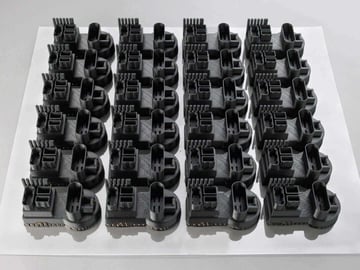
Functional Prototypes provide the groundwork for the production of the end product. At this stage, prototypes are tested for their mechanical properties and manufacturability. In order to give you an idea of the possibilities, we have compiled a small selection of scenarios and how they can be realized.
Engineering Evaluations
One of the virtues of rapid prototyping technology is the geometrical accuracy. Rapid prototypes have the exact same dimensions as the finished products. Fused Deposition Modeling is a cheap and quick way to produce surrogate components. These are parts that claim space in a larger structure to assess installation, serviceability, routing and interfaces. Surrogate components are usually employed when the final component is not yet available or too valuable to risk it being damaged during repeated installations.
Testing materials and other properties
Using MultiJet technology, it is easy to create injection molds for small scale production of parts for testing. Since these parts can be produced with the same materials of the finished product, they are virtually indistinguishable from the finished product and tests performed on these are particularly meaningful. MultiJet is also suitable to create multi-material molds by over-molding. The line between prototypes and end products is becoming increasingly blurred, as rapid prototyping technologies like this allow to transition to small batch production.
Simulation of production/assembly
Many items like plastic containers feature living hinges and snap-fit closures as cost efficient alternative to mechanical hinges. Some MultiJetand Selective Laser Sintering materials are sufficiently though to can withstand the functional testing of living hinges. Depending on the material you choose the behavior and performance of hinges and snap-fit closures can be modified.
Rapid prototyping is an ideal tool for wind tunnel testing. Internal structures that used to be complicated to produce with traditional CNC milling, are easy to create with MultiJet or Fused Deposition Modelingprinters.
Apart from the mechanical testing, outlined above, rapid prototyping enables a myriad of testing scenarios to explore the electrical, acoustical and thermal properties.
3D PRINTING PROTOTYPING
The Technologies
3D Printing Prototyping Technology: ColorJet Printing (CJP)
ColorJet Printing (CJP) brings together two components: First, a core powder is spread over the build platform. Then, a liquid color binder material is jetted over the core. This serves two purposes: to color and to bind the core material. This process is repeated for each and every layer until the object is completed.There is a handful of finishing options available for parts printed with CJP technology that
There is a handful of finishing options available for parts printed with CJP technology that are interesting for rapid prototyping architectural and general concept models. You can clear coat them to add a hard, smooth coating or wax coat to smooth out the surface finish.
3D Printing Prototyping Technology: Direct Metal Laser Sintering (DMLS)
Direct Metal Laser Sintering (DMLS) works similarly to SLS printers: a high-energy laser beam selectively melts together metal powder, layer by layer until the object is complete. In case support structures are required by the design, these have to be removed manually.DMLS is a highly interesting technology for the purposes of rapid prototyping and
DMLS is a highly interesting technology for the purposes of rapid prototyping and functional prototypes in particular, as the printed parts are in fact fully functional and have mechanical properties similar to those of casted parts. The test performed on these parts are thus very helpful to assess the performance of production-grade parts. Other applications include tooling and spare parts.
3D Printing Prototyping Technology: Fused Deposition Modeling (FDM)
FDM is the technology most commonly used in 3D printing. Thermoplastic filament is heated and extruded through an extrusion head that deposits the molten plastic layer by layer. Effectively, building the object from the bottom up. If an object has overhanging parts, however, it will need support structures that can be removed after the printing is finished.
This rapid prototyping technology is a cost-effective means for functional prototypes in small business since it’s capable of fabricating robust parts accurately and quickly.
3D Printing Prototyping Technology: MultiJet Printing (MJP)
As the epithet “Multi” suggests, MultiJet technology enables you to print object with two or more materials, with different mechanical or physical properties, in a single print. The printer jets layers of photopolymer materials onto a build platform, where it is instantly cured by UV light. This technology requires the use of a gel-like support material that can be washed away with water.
MultiJet is the ideal rapid prototyping technology for visual models that feature fine details and smooth surfaces. Parts printed with this technology can be used as masters for vacuum casting.
3D Printing Prototyping Technology: Stereolithography (SLA)
SLA printers cure photosensitive liquid resin by exposing it to a UV-laser beam so that the resin hardens. Then the model-building platform steps down and another layer is cured. This process is repeated for each layer until the object is completed. Like FDM 3D printers, objects with overhangs require support structures. These can be easily removed with a solvent after printing has finished.
SLA results in objects with extremely accurate features and smooth surfaces. SLA prints can even be used as master models for copying techniques like Vacuum Casting. It is a very versatile technology for rapid prototyping, as SLA prints can be used for concept and functional prototypes alike.
3D Printing Prototyping Technology: Selective Laser Sintering (SLS)
SLS is similar to SLA, but the key difference is that this type of 3D printer uses powdered material in the build area instead of liquid resin. A laser selectively sinters a layer of powder, which binds the material together to create a solid structure. When the object is fully formed, it’s left to cool in the machine before being removed.
SLS is widely used for product development and rapid prototyping in a wide range of commercial industries. The materials used in SLS can range from nylon, glass, and ceramics to aluminum, silver, and even steel.
This type of 3D printer requires the use of expensive high-powered lasers. A 3D printer of this kind will put you back substantially — if you want to use this technology nonetheless, consider one the professional 3D printing services like Shapeways, Sculpteo, and i.materialise. Also, you can compare prices with our Price comparison.
3D Printing Prototyping Technology: Vacuum Casting(VC)
VC allows you to produce a small series of production grade prototypes (20-25 reproductions), based on a master model. This master model is made using other rapid prototyping technologies like MJP and SLA. Then a mold is cast of silicone rubber. The mold is injected with liquid plastic and placed into a vacuum chamber to draw out any remaining are bubbles.
No additional finishing is required, as the prototype adopts the surface of the original master model. In addition, it is possible to create multimaterial objects using vacuum casting by over-molding. Since you can produce prototypes that closely reflect the final product, this sort of technology is particularly worthwhile for functional prototypes, promotional photoshoots and handing out marketing samples.


86-13143415646
Contact:
 Tel: 86-755-23000620 Fax: 86-755-23000621
 Email:info@galaxy3dm.com/info@seetoptech.com
 Address: A3 , Dingfeng Industrial Zone, Fuyong Town, Shenzhen, China
Galaxy 3D Manfacturing Solution
Copyright (©) 2020 Shenzhen Seetop Technology Co.,Limited
