
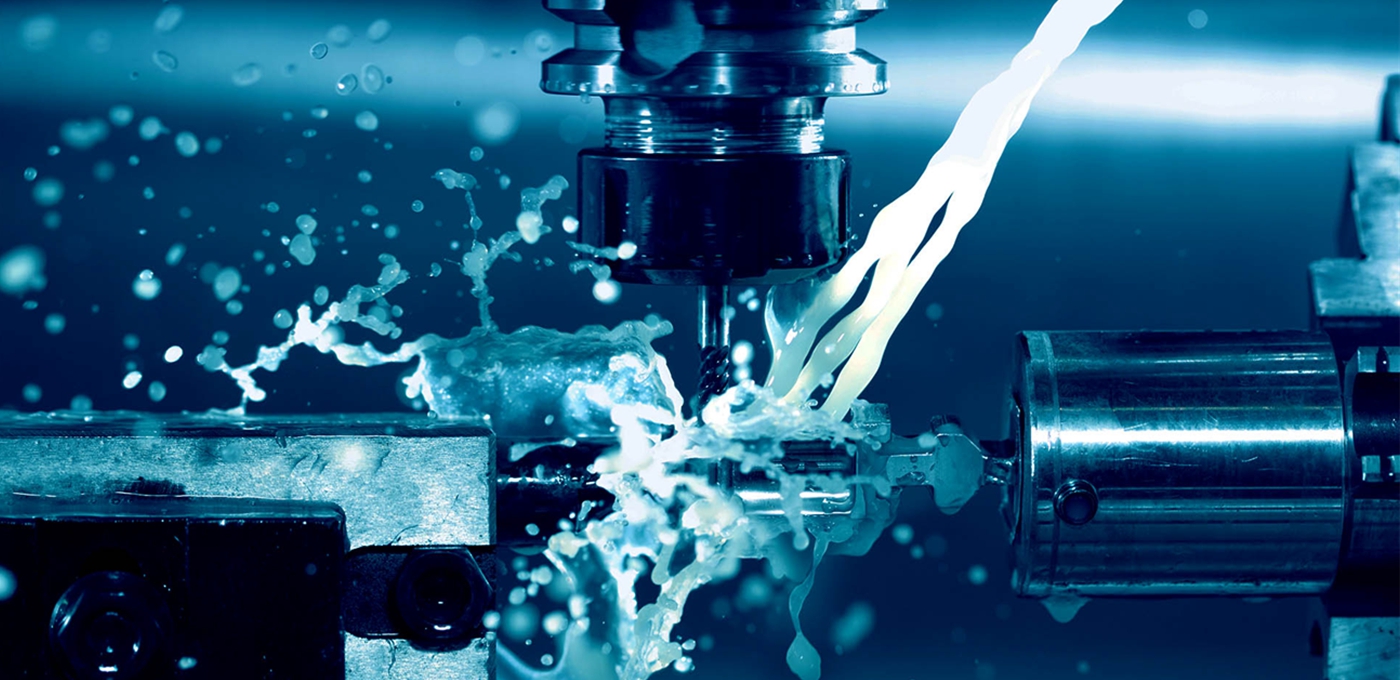


Pressure Die Casting Services
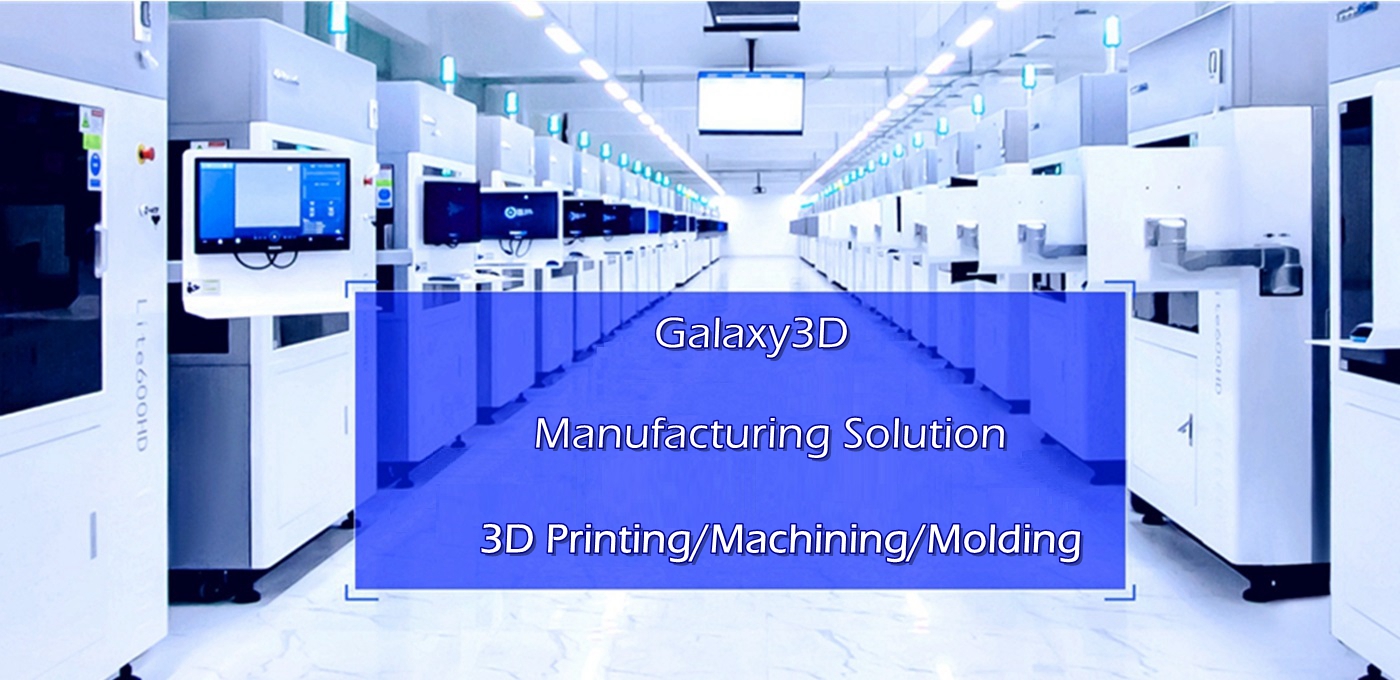
Die CastingGalaxy3DM is a precision manufacturing factory located in Guang Dong. It is a professional manufacturer of cnc processing, 3D printing, stamping, sheet metal, aluminum & plastic extrusion, pressure die casting, silicone mold and injection molding.
Die Casting
Pressure Die Casting Services
Galaxy3DM has good experience in pressure casting, and has a large casting partner, so we also have a lot of product cases in casting, including car brake discs, coffee machine parts, office machinery, production watch bodies, automotive Accessories, pipe fittings, motors, electrical appliances, etc
Pressure casting is a process in which a liquid or semi-solid metal or alloy, or a liquid metal or alloy containing a reinforcement phase, is filled into the cavity of the die-casting mold at high speed under high pressure, and the metal or alloy is under pressure A casting method that solidifies to form a casting.
The commonly used pressure during die casting is 4 ~ 500MPa, and the metal filling speed is 0.5-120m / s. Therefore, high pressure and high speed are the fundamental difference between the die casting method and other casting methods, and are also important features.

Advantages of die casting
1: Various castings with complex shapes can be cast, such as box, frame, bed, cylinder block, etc.
2: The size and quality of castings are almost unlimited, castings as small as a few millimeters, a few grams, as large as a dozen meters, and hundreds of tons can be cast.
3: Any metal and alloy castings can be cast.
4: The casting production equipment is simple, the investment is small, and the raw materials for casting are widely available, so the casting cost is low.
5: The shape and size of the casting are close to the parts, so the workload of cutting processing is reduced, and a lot of metal materials can be saved.
Die Casting Benefits
Die casting allows for the creation of parts with complex shapes and intricate designs at a price point that doesn’t break the bank. Some of the greatest benefits associated with die casting include:
- Advanced production speed
- Accurate dimensional stability
- Tight tolerances
- Variable wall thicknesses
- Fast production times
- Reduction in scrap
- Extended tool life
Classification of die casting
1 Ordinary sand casting, using sand as a mold material, also known as sand casting, sand turning, including three types of wet sand, dry sand and chemically hardened sand, but not all sand can be used for casting. The advantage is that the cost is lower, because the sand used in the mold can be reused; the disadvantage is that the mold is time-consuming, the mold itself cannot be reused, and it must be destroyed to obtain the finished product.
1.1 Sand mold (core) casting method: wet mold sand, resin self-hardening sand mold, water glass sand mold, dry and surface dry mold, solid mold casting, negative pressure molding.
1.2 Sand core manufacturing method: It is selected according to the sand core size, shape, production batch and specific production conditions. In production, it can be divided into manual core making and machine core making.
2 Special castings can be divided into special castings with natural mineral sandstone as the main modeling materials (such as investment casting, mud casting, shell casting, negative pressure casting, solid casting, ceramic casting, etc.) And special casting with metal as the main mold material (such as metal mold casting, pressure casting, continuous casting, low pressure casting, centrifugal casting, etc.).
2.1 Metal mold casting method
Use a metal with a higher melting point than the raw material to make a mold. Among them are subdivided into gravity casting method, low pressure casting method and high pressure casting method.
Limited by the melting point of the mold, the metals that can be cast are also limited.
2.2 Dewaxing casting method
This method can be an outer film casting method and a solid casting method.

Types of Die Casting Processes
All die casting process types are designed with the same goal in mind—cast a mold using injected molten metal. Depending on the type of melted metal, part geometry and part size, different die casting processes can deliver superior results over alternative methods. The two main types of die casting processes are hot-chamber and cold-chamber die casting. Variations on these two types of die casting include:
Low Pressure Die Casting
Vacuum Die Casting
Squeeze Die Casting
Semi Solid Die casting
The Hot-Chamber Die Casting Process (Hot Casting)
Hot-chamber die casting, sometimes called gooseneck casting, or hot casting, is the more popular of the two main die casting processes. In this process, the cylinder chamber of the injection mechanism is completely immersed in the molten metal bath. A gooseneck metal feed system draws the molten metal into the die cavity. This process lends itself to higher rates of part production than with the cold-chamber process.
While direct immersion in the molten bath allows for quick and convenient mold injection, it also results in increased corrosion susceptibility. Due to this fact, the hot-chamber die casting process is best suited for applications that utilize metals with low melting points and high fluidity. Suitable metals for the hot-chamber die casting process include lead, magnesium, zinc, and copper.
The Cold-Chamber Die Casting Process
The cold-chamber die casting process is very similar to hot-chamber die casting. With a design that focuses on minimizing machine corrosion rather than production efficiency, the melted metal is automatically- or hand-ladled into the injection system. This eliminates the necessity for the injection mechanism to be immersed in the molten metal bath.
For applications that are too corrosive for the immersion design of hot-chamber die casting, the cold-chamber process can be an excellent alternative. These applications include the casting of metals with high melting temperatures, such as aluminum and aluminum alloys.
The Low-Pressure Die Casting Process
What is low pressure die casting? Low-pressure die casting is a process best suited for aluminum components that are symmetric around an axis of rotation. Vehicle wheels, for example, are often fabricated through low-pressure die casting. In this type of process, the mold is situated vertically above the molten metal bath and connected via a riser tube. When the chamber is pressurized (usually between 20 and 100kPa), the metal is pulled upward and into the mold. The elimination of feeders from this type of low pressure aluminum casting process delivers the high casting yields.
The Vacuum Die Casting Process
Vacuum pressure casting (VPC) is a relatively new die casting process that delivers enhanced strength and minimal porosity. This process is similar to low-pressure die casting, except the locations of the die-cast mold and molten metal bath are reversed. The cylinder chamber can become a vacuum, which forces the molten metal into the mold cavity. This design reduces turbulence and limits the amount of gas inclusions. Vacuum die casting is especially beneficial in applications destined for post-casting heat treatment.
The Squeeze Die Casting Process
Squeeze casting was created as a workable solution for casting metals and alloys with low fluidity. In this process, the molten metal fills up an open die, which then squeezes closed, forcing the metal into the recessed portions of the molding. The squeeze casting process delivers extremely dense products and is a complementary process to subsequent heat-treating. The process is most often associated with molten aluminum and is used in applications that call for fiber reinforcement.
The Semi-Solid Die Casting Process
Semi-solid die casting, sometimes called Thixoforming, is another process that delivers minimal porosity and maximum density. A machine cuts the workpiece into smaller slugs, and then heated. Once the metal has reached the phase transition between solid and liquid, resulting in a somewhat slushy texture, a shot sleeve forces it into the mold cavity, where it hardens. The benefit of this is improved precision. Non-ferrous metals such as magnesium alloy and aluminum alloy are most often used with the semi-solid die casting process.

Process Cycles & Types of Die Casting
The basic die casting process consists of injecting molten metal under high pressure into a steel mold called a die. A complete die casting cycle can vary from less than a few seconds for small components to 2-3 minutes for a casting of over 30 lbs, making die casting the fastest technique available for producing precise non-ferrous metal parts. The following processes are routinely used to create custom die casting applications.
Clamping
The first step in the die casting process involves the preparation and clamping of two die halves. Once cleaned and properly prepared, the two clean die halves are lubricated to prevent sticking and then closed, securely clamping them together. During this phase, force must be applied to the die to keep it secure while the metal is injected.
Injection
Once transferred from either a hot or cold chamber machine, the molten metal is injected into the die through a high-pressure process. These pressures can range from 1,000 to 20,000 psi. The total injection time required for a project will depend upon the length of time required to fill all the cavities and channels within the die. The correct duration of injection time can be determined by the thermodynamic properties of the material, as well as the wall thickness of the casting. Greater wall thickness will require a longer injection time.
Cooling
The cooling process begins the moment the molten metal enters the die cavity. Once the entire cavity of the mold is filled and the molten metal solidifies, the final shape of the casting is formed. It is important that the die not be opened until it has completely cooled. This ensures that the casting is completely solidified. Greater wall thickness will require a longer cooling time. Additionally, the geometric complexity of the die also requires a longer cooling time due to the additional resistance to the flow of heat.
Ejection
Once the proper amount of cooling time has elapsed, the die halves can be opened and ejected from the die cavity. Once the casting is ejected, the die can be clamped shut for the next injection.
Trimming
Excess material and flash must be trimmed from the channels of the die due to solidification during the casting process. This is accomplished either manually or through the assistance of a saw, or trimming press. The scrap material that results from this trimming is either discarded or can be reused in the die casting process.

Application :
Automotive parts like wheels, blocks, cylinder heads, manifolds etc.Aerospace castings.Electric motor housings.Kitchen ware such as pressure cooker.Cabinets for the electronics industry.General hardware appliances, pump parts, plumbing parts.
Materials

Die casting typically makes use of non-ferrous alloys. The four most common alloys that are die cast are shown below, along with brief descriptions of their properties. (Follow the links to search the material library).
Materials | Properties |
Aluminum alloys |
|
Copper alloys |
|
Magnesium alloys |
|
Zinc alloys |
|
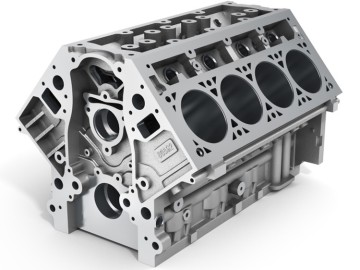
The selection of a material for die casting is based upon several factors including the density, melting point, strength, corrosion resistance, and cost. The material may also affect the part design. For example, the use of zinc, which is a highly ductile metal, can allow for thinner walls and a better surface finish than many other alloys. The material not only determines the properties of the final casting, but also impacts the machine and tooling. Materials with low melting temperatures, such as zinc alloys, can be die cast in a hot chamber machine. However, materials with a higher melting temperature, such as aluminum and copper alloys, require the use of cold chamber machine. The melting temperature also affects the tooling, as a higher temperature will have a greater adverse effect on the life of the dies.
Die Casting Alloys
Die casting alloys are normally non-ferrous, and there is a large number available with a wide range of physical and mechanical properties covering almost every conceivable application a designer might require.
Aluminum and zinc alloys are the most widely used, and are followed by magnesium, zinc-aluminum (AZ) alloys, copper, tin and lead.
Zinc, lead and tin based alloys are classified as low melting point metals, all melting at less than 725oF (385oC). Zinc-aluminum (ZA) alloys have a slightly higher melting range of 800oF to 900oF (426oC to 482oC). Aluminum and magnesium alloys are considered to be moderate melting point alloys, being cast in the 1150oF to 1300oF (621oC to 704oC) range. Copper alloys are considered to be high melting pint, over 1650oF (899oC). Low melting point alloys are cast in hot chamber machines. Intermediate and high melting point alloys are cast in cold chamber machines. In recent years, specially designed hot chamber machines for die casting magnesium alloys have come into the U.S.
ALUMINUM ALLOYS
Aluminum die casting alloys (Table 1) are lightweight, offer good corrosion resistance, ease of casting, good mechanical properties and dimensional stability.
Although a variety of aluminum alloys made from primary or recycled metal can be die cast, most designers select standard alloys listed below:
360 — Selected for best corrosion resistance. Special alloys for special applications are available, but their use usually entails significant cost premiums.
380 — An alloy which provides the best combination of utility and cost.
383 & 384 — These alloys are a modification of 380. Both provide better die filling, but with a moderate sacrifice in mechanical properties, such as toughness.
390 — Selected for special applications where high strength, fluidity and wear-resistance/bearing properties are required.
413 (A13) — Used for maximum pressure tightness and fluidity.
ZINC ALLOYS
Zinc base alloys (Table 2) are the easiest to die cast. Ductility is high and impact strength is excellent, making these alloys suitable for a wide range of products. Zinc alloys can be cast with thin walls and excellent surface smoothness making preparation for plating and painting relatively easy.
It is essential that only high purity (99.99 + 0/0) zinc metal be used in the formulation of alloys. Low limits on lead, tin and cadmium ensure the long-term integrity of the alloy’s strength and dimensional stability.
ZINC-ALUMINUM (ZA) ALLOYS
ZA alloys represent a new family of zinc based die casting materials which contain higher aluminum content than standard zinc alloys. These alloys provide high strength characteristics plus high hardness and good bearing properties (Table 2). Thin wall castability characteristics and die life are similar to zinc alloys. ZA-8 is recommended for hot chamber die casting, which ZA-12 and ZA-27 must be cast by the cold chamber die casting process. All ZA alloys offer similar creep properties and are superior to standard zinc alloys.
ZA-8 — Provides strength, hardness and creep properties.
ZA-12 — Provides excellent bearing properties with strength and hardness characteristics between ZA-8 and ZA-27, plus good dimensional stability properties and somewhat better castability than ZA-27.
ZA-27 — Offers the highest mechanical properties of the ZA family and is, therefore, recommended when maximum performance is required.

The Best Aluminum Alloys for Die Casting
It is generally agreed that die casting with aluminum is one of the most cost-effective and sustainable ways to create metal parts. When using aluminum, you will have to choose which aluminum casting alloys to use in the process. Here is some technical information on aluminum alloys to help you get a better sense of your alloy options and why we choose the alloys we prefer.
A380 Aluminum Alloy
The most popular alloy for aluminum die casting is A380. We use A380 because it has demonstrably the best combination of physical and mechanical properties for casting, including being lightweight, very strong at high temperatures and corrosion resistant. A380 is also very good at retaining dimensional stability even with complex shapes and thin walls and offers high electrical and thermal conductivity.
A383 Aluminum Alloy
Another option for die casters is to use A383 aluminum alloy. This is alloy is typically only used when you are forming intricate components and require very specific die-filling characteristics. While it doesn’t share all the properties of A380, it does offer higher strength at high temperatures with less chance of cracking under heat.
A360 Aluminum Alloy
A360 is harder to cast than A380, which is why many die casters avoid it. However, it does offer higher strength at high temperatures, better ductility and higher corrosion resistance, so you may want to consider this alloy depending on your casting abilities and needs.
A360 vs. A380 v. A383
To summarize the differences between the three types of casting alloys as outlined above, A360 has the best pressure tightness, high-temperature strength and corrosion resistance of the three alloys.
A380 is also highly corrosion-resistant but more cost-effective and easier to work with than A360, so this is the one you would use most commonly if you have budgetary concerns to consider and don’t need the highest levels of corrosion resistance or pressure tightness.
A383 is a modified A380 alloy you would only use if you need precise die filling that you are not getting from your A380 alloy, as it is not as durable as A380.
ZA Alloys
Some applications may call for ZA, or zinc aluminum alloys, for your die casting. Originally the primary type of alloy used in gravity casting, scientists have refined this type of alloy for effective use in die casting. The three alloys that fall into this category are ZA-8, ZA-12 and ZA-27. Alloys that combine zinc and aluminum offer higher strength, lower density, better creep resistance and better wear resistance than other zinc alloys.
ZA-8
ZA-8 is the only hot chamber alloy of the three. It is the zinc aluminum alloy one uses in die casting with the lowest possible aluminum content. It features an aluminum content of 8.4 percent with one percent copper. Because of the minimal aluminum content, ZA-8 has a lower melting point and higher density than other zinc aluminum alloys. This makes it ideal for hot-chamber die casting. It’s often used for higher strength requirements that need plating.
ZA-12
ZA-12 has somewhat greater aluminum content than ZA-8 but less than ZA-27, so it offers a sometimes desirable mediation of zinc alloy properties. It has 11 percent aluminum and one percent copper content. It provides the best combination of castability and strength of the ZA alloys. Because of its higher melting point and lower density, if you are using ZA-12 for casting, you must use the cold-chamber method.
ZA-27
ZA-27 is the strongest of the three ZA alloys, but difficult to cast. It has the highest aluminum content of all the zinc-aluminum alloys we use for die casting, with an aluminum content of 27 percent and copper content of 2.2 percent. The result is a material with the highest melting point, highest strength and lowest density.
Unlike other zinc aluminum alloy parts, parts made with ZA-27 are typically not ideal for chrome plating. As with ZA-12, you cannot use this alloy with hot-chamber casting because of its high melting point. Underside shrinkage can be an issue in die casting for ZA-27 – so cooling rates need to be looked at carefully.
Shenzhen Seetop Technology Co.,Limited is a precision manufacturing factory located in Guang Dong. It is a professional manufacturer of cnc processing, 3D printing, stamping, sheet metal, aluminum & plastic extrusion, pressure die casting, silicone mold and injection molding. We have a complete production management system, ISO standard, and The internal staff has systematically trained the ISO process, so the production, manufacturing, testing, assembly and packaging of the products are very clear.
We are a professional supplier of die casting in China, offering a high quality affordable, metal die casting process solution.
Capabilities
1. Ability to manufacturing complex cast molds and metal parts.
2. The precision machining after casting.
3. Strict quality control and testing report, includes: X-Ray, Chemical Composition, Mechanical Property Test, CMM dimensional checking.
We also provide the following services:
. Heat Treatment: Hardening, Annealing, Normalizing, Stress Relieving, Softening, and Graphitization.
2. Machining: Turning, Boring, Drilling, Milling, Threading, Grinding, Cutting, Engraving, EDM Machining, Riveting.
3. Surface Treatment: Metal Polishing (Metal Mirror Polished, Brushed Metal Finishing), Shot Blasting, Sandblasting, Spray Painting, Powder Coating, Thermal Spraying, Anodizing, Chrome Plating, Nickel Electroplating / Electroless Nickel Plating, Hot-Dip Galvanizing, Copper Plating, Phosphorizing, Electrophoresis and Passivation.
4. Assembly: Stud, Steel Sall & Helicoil Inserts, O-ring, Gasket
5. Packing
6. Testing Report, Quality Control Report

Contact us for Equipment List
Galaxy3DM Quality Assurance
Our quality assurance starts from incoming materials inspection, then first article and in-process inspection, and final inspection and testing with reports and certifications before shipping.
Quality Control System
We are equipped with cutting-edge measuring and testing equipment in house, we execute inspection and quality control system for the whole process to make sure every project meet your requirement. Our quality assurance starts from incoming materials inspection, then first article and in-process inspection, and final inspection and testing with reports and certifications before shipping.
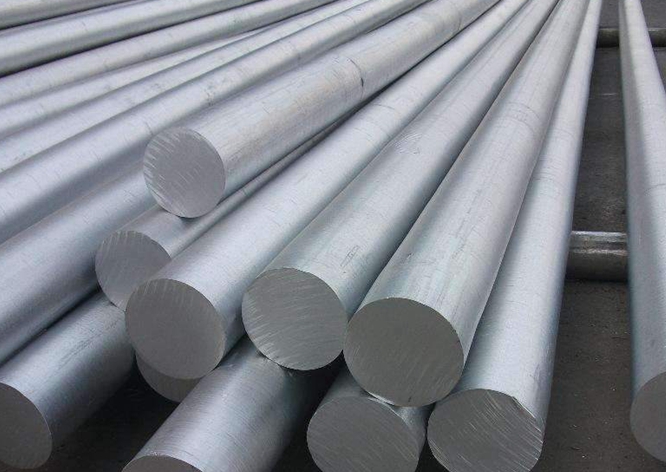
RAW Material Control
Purchasing material from suppliers without certificate is very risky. So we always need to get a report from our material supplier ,and check this material composition.
QC will check all size if match our drawings , meantime ,also will check all surface if ok .If all ok ,this material will agree go into our warehouse.
Imaging if we used wrong material and have a size is wrong , will loss very big cost to remake parts ,and also lead time can’t be guaranteed,thanks for all tester, All problems Sorted.
On-Site Inspection
QC people will checking on-site all parts every two hours, this is very important work during produce, because if find is wrong after products finished , thats very danger, So we have to make sure that we don’t make any mistakes at every step, even we find wrong ,we also can rescue .

Go-no go fixed gauges | Ring gauge
Thread test also is very imortant point, because surface finishing will affect this thread ,for example, Anodized, Plating, Heat treatment… We need to control this thread tight/loose during machining, Ensure that all thread is ok after go-no go fixed gauges | ring gauge checked.

Projector Measuring Instrument
It can measure point, line, circle, arc and oval, rectangular with the multi-point positioning function, combination of measurements, center structure and the intersection of structure, the midpoint of construction, line structure, a round structure.It has various functions of data processing, display, input and output, Measurement data output Word, Excel and Auto CAD directly to conduct statistical analysis, particularly, and the work piece straightening function is very useful.

Coordinate Measuring Machine
At its most basic a coordinate is a point, a fixed singular location in three-dimensional space. A series of points can be used to define the parameters of a complex shape. Therefore a CMM(coordinate measuring machine definition) is any device that is able to collect this set of points for a given object and to do so with an acceptable degree of accuracy and repeatability.


1. What is Die Casting? How is it different from other "casting" process?
"Die casting is the process of forcing molten metal under high pressure into mold cavities (which are machined into dies). Most die castings are made from non-ferrous metals. It's known as "pressure die casting" in Europe."Gravity casting" (a.k.a. "permanent mold casting" in USA and Canada) uses gravity to fill the mold.2. I don't have experience desiging parts for die casting, and want to bring existing machined parts to die casting. What should I know?
Here are some basic design guidelines for die casting parts:
Even wall thickness.
Rounding of all edges and corners.
Smooth blending and continuity of all the features.
We will provide additional design modification suggestions to make sure your parts are casted successfully.
3.Can fasteners or hardware be installed on the die casted parts?
Yes, we can put PEM studs, nuts, Southco fasteners, or hardware like McMaster-Carr components or inserts to the casted parts.
Yes, we can put PEM studs, nuts, Southco fasteners, or hardware like McMaster-Carr components or inserts to the casted parts.
4.We are new to the die casting process, where should we start?
You can start by providing the part's 2D and 3D drawings to us. We can provide Design For Manufacture (DFM) service for you—plese see our Design for Manufacture Tips for Die Cast Parts article.
You can start by providing the part's 2D and 3D drawings to us. We can provide Design For Manufacture (DFM) service for you—plese see our Design for Manufacture Tips for Die Cast Parts article.
5.What information do you need in order to provide an accurate quote? How soon can I get a quote?
Please provide us with the part's 3D CAD drawings (such as IGES, STEP, or X_T). We can also quote based on 2D drawings (in DWG, DXF, or even PDF format [but with weight information]). We can also import CAD files directly from popular CAD software, such as Pro/ENGINEER, UGS, Catia, and Solid Edge. In addition, we need the production information listed in our request for quote form. Quoting turnaround is typically within a week, and can be even sooner if there is special timing constraint.
6.How do customers choose the right die casting alloy: magnesium, aluminum, or zinc?
Magnesium has a density of 1.74 g/cm³, and is the lightest structural metal in common use. Aluminum has a density of about 2.71 g/cm³, and is the most widely used alloy for castings worldwide. Zinc offers a wide range of excellent physical and mechanical properties, and can be used to achieve thinner sections in the parts. Please see the page on material properties .
Magnesium has a density of 1.74 g/cm³, and is the lightest structural metal in common use. Aluminum has a density of about 2.71 g/cm³, and is the most widely used alloy for castings worldwide. Zinc offers a wide range of excellent physical and mechanical properties, and can be used to achieve thinner sections in the parts. Please see the page on material properties .
7.How do customers specifiy the color we need painted on the die casted parts?
You can specify your color by using RAL or Pantone color codes. If you don’t have the color code, you can send us a color chip or a color sample for us to come up with a matching color chip.
You can specify your color by using RAL or Pantone color codes. If you don’t have the color code, you can send us a color chip or a color sample for us to come up with a matching color chip.
8.What are your minmum order quantities (MOQ's) for die casting parts?
Due to our specialty in short run orders, we are very flexible in order quantities. Our quotes always break down pricing by MOQ's: e.g., there might be a price premium if orders are below 3,000 pcs., and another one if orders are below 1,500 pcs. (these numbers vary and are just for examples).
9.What is magnesium?
Magnesium is: among 1) the lightest of all metals (63% of aluminum, 38% of titanium); 2) stronger than engineering plastics; 3) 100 times better in heat dissipation than plastics; 4) electromagnetic-shielding; 5) best in vibration absorption of all metals; 6) environmentally safe (non-hazardous and recyclable); 7) easy to machine; 8) abundant in supply (sixth most abundant on earth).
10.What tolerace can you support in your die castings?
We support NADCA and other international standard tolerance for die castings.
We support NADCA and other international standard tolerance for die castings.
Welcome to contact us for Best Quotation!


 複製產品鏈接
 長按圖片保存/分享
詢盤
谘詢表單:
谘詢內容:

你還沒有添加任何產品

詢盤
谘詢表單:
谘詢內容:
你還沒有添加任何產品


86-13143415646
Contact:
 Tel: 86-755-23000620 Fax: 86-755-23000621
 Email:info@galaxy3dm.com/info@seetoptech.com
 Address: A3 , Dingfeng Industrial Zone, Fuyong Town, Shenzhen, China
Galaxy 3D Manfacturing Solution
Copyright (©) 2020 Shenzhen Seetop Technology Co.,Limited
